
Seeds

Here a few of the seeds I've grown:
Spelt
Grand Teton Ancient Grains is an organic grower of ancient grains. Each kind of grain is organically grown with a mindfulness of soil health as well. They often employ the use of cover crops to restore nitrogen to the soil. I have only included spelt berries here, but other grain options provided by Grand Teton Ancient Grains include Khorasan, Emmer, Einkorn, and Red and White Wheats.
My little brother was unable to eat wheat for a time, but was able to handle Spelt, Einkorn, Emmer, and other ancient forms of grain.
Broccoli
Broccoli sprouts take slightly longer to grow than alfalfa and lentils/beans, but are very cute and reliable. Broccoli is typically ready one day after the alfalfa. Handy Pantry (the company who's seed this is) works with organic seed and non GMOs.
Red Clover
This is a personal favorite as Red Clover is a blood cleanser (see Dr. Christopher's Herbal Legacy for details). Not only that, but because they are a member of the Pea/Bean family, is a good source of protein. A few other health facts listed here include the presence of iron and calcium. Because these minerals (and others) are coming from the living plant, it is much easier for them to be used and assimilated into the body.
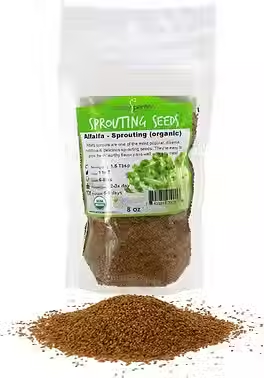
Alfalfa
This is a favorite sprout of mine. It has a mild taste and very easy to incorporate into dishes or be added as a garnish. It also is a star in Dr. Christopher's Jurassic Green formula.
3 Part Salad Mix
This combination mix includes radish, alfalfa, and broccoli seeds. The radish sprouts faster than the other two and add a nice spot of heat to the whole thing.
5 Part Salad Mix
This salad includes the seeds in the 3 Part Salad Mix (radish, alfalfa, and broccoli) as well as lentils and mung beans. I have had personal trouble with this mix and I am not entirely certain when the best time to eat them is. The mung beans and lentils are ready to eat as soon as the radicle (root) emerges, whereas the other three are ready when they have their cotyledons up and green. However, the three mentioned could easily be eaten younger with the sprouted lentils and mung beans. I would not recommend eating them once they have all brought forth their cotyledons as the lentils and mung beans tend to get tougher and slightly bitter.



I hope you all enjoy your sprouts!